

See A Dermatologist for Your Moles
Dermatologist For Skin Cancer Hertfordshire
Moles are a normal part of your skin but sometimes, moles or other skin spots can change in ways that may signal something more serious, like skin cancer.
Keeping an eye on changes in your moles is one of the easiest and most important ways to protect your health.
At our clinic, we specialise in mole checks and skin cancer screening.
Visit Medi-Derm Clinic today and experience dermatological care in a welcoming, professional environment. Your skin deserves the best—let us help you achieve it.
Schedule a Check-Up
Most moles are harmless, but some can develop into skin cancer such as basal cell carcinoma, squamous cell carcinoma, or melanoma.
The good news? If caught early, they are treatable. A mole check helps spot trouble before it becomes serious.
Even if you think your moles look fine, it’s best to have a professional check them- just to be safe, especially if you have noticed any changes in shape, size, colour or symptoms ( itching, oozing, bleeding.)
Who Should Get Regular Mole Checks?
You should get in touch with one of our dermatologists for skin cancer in Hertfordshire and consider routine mole checks if you:
- Have lots of moles, or freckles
- Have a family or personal history of skin cancer
- Have been on immunosuppressant treatment
- Spend a lot of time in the sun, are often sunburnt or use sun/tanning beds
- Notice a mole that is changing in size, shape or colour
- Have a mole that itches, bleeds, or looks “off”
Visit Medi-Derm Clinic today
Healthy Skin Starts Here
Experience expert dermatological care in a welcoming, professional environment. Your skin deserves the best—let us help you achieve it.
Basal Cell Carcinoma
Basal cell carcinoma (BCC) is the most common type of skin cancer, typically caused by prolonged sun exposure. It usually appears as a pearly or waxy bump, a flat, scaly patch, or a sore that doesn’t heal, often on the face, neck, or other sun-exposed areas. While BCC grows slowly and rarely spreads, it can cause significant local damage if untreated. Treatment options include surgical excision, Mohs surgery, cryotherapy, and topical medications. Preventive measures, such as using sunscreen and avoiding excessive UV exposure, help reduce the risk. Early diagnosis ensures effective treatment and minimizes complications.
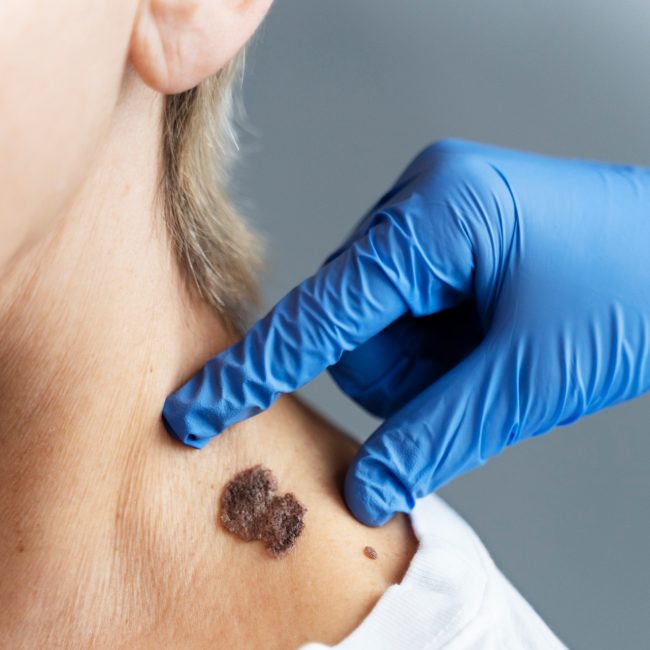


What To Expect From Your Mole Check
A mole check is simple and usually takes just 15–30 minutes.
Here’s what our dermatologist will do:
- Take a detailed history
- A full skin examination with a dermatoscope (a specialized tool) and checking any suspicious or atypical moles and skin lesions from head to toe.
- If something looks concerning, we may recommend monitoring it, or removing it.
Insurance Payments Accepted






FAQs
While it’s helpful to be aware of changes in your own skin, self-checks cannot replace a professional assessment. We use specialised tools and expertise to detect subtle changes that might indicate skin cancer early.
The frequency of professional mole checks varies depending on your risk factors, such as family history, number of moles, or past sun exposure. Your dermatologist can recommend a personalised schedule based on your needs.
Most mole removal procedures are quick and performed under local anesthesia, so discomfort is minimal. Recovery usually takes a few days to a couple of weeks, depending on the method used, and proper aftercare ensures minimal scarring.
Some types of skin cancer can run in families. If you have a family history of melanoma or other skin cancers, your relatives may benefit from regular skin checks and preventive advice from a dermatologist. This is something our dermatologists will be able to provide personalised advice on following your consultation.
Yes, UV exposure is a major risk factor for skin cancer. Even after treatment or mole removal, protecting your skin with sunscreen, protective clothing, and avoiding tanning beds are essential to reduce the risk of future skin cancers.
At Medi Derm Clinic, we take a detailed, head-to-toe approach to mole checks using advanced dermatoscopes. We are adept at ensuring every patient feels informed and reassured throughout the screening process.
If a mole or lesion is concerning, our team explains all options clearly, whether that’s monitoring, or minor surgical removal. Patients receive personalised care plans and follow-up, making sure they understand every step of the process and feel confident in their care.